The flag of Jordan shows horizontal stripes of black, white, and green connected by a red chevron, which bears a seven-pointed white star. The Jordanianflag was officially adopted on April 16, 1928.
In this article, learn about the appearance, symbolism, and history of the Jordanflag, plus some fun facts about the flag and the country. Want to learn even more about the Jordanianflag? Ask Quillbot’s AI Chat.
Key takeaways
The flag of Jordan was officially adopted on April 16, 1928 and features three horizontal black, white, and green stripes with a red chevron and a seven-pointed white star inspired by the Arab Revolt.
Every color and symbol has meaning. The stripes represent historic Islamic caliphates, the red chevron symbolizes the Hashemite dynasty and the Arab Revolt, and the seven-pointed star represents Arab unity and the seven verses of Al-Fātiḥah, the opening chapter of the Quran.
Learn how the flag evolved from the 1916 Arab Revolt flag and how it compares with the similar-looking flag of Palestine.
Explore quick facts and trivia about Jordan’s flag, its unique design, and fascinating facts about the country’s history, landmarks, and culture.
Lebanon is a small but unique nation located in the Levant region bordering the Mediterranean Sea. It’s known for its cuisine, ancient cities, and cedar trees. In this guide you’ll discover the history behind its flag, what its symbols represent, and interesting fun facts about Lebanon.
Try Quillbot’s free Image Generator to create fun graphics of your favorite country flags.
Key takeaways
Learn what the flag of Lebanon represents, including the symbolism of its red, white, and green design and the iconic cedar tree at its center.
This guide also explores the flag’s adoption in 1943, the history behind its design, and interesting facts about Lebanon’s culture, landmarks, and heritage.
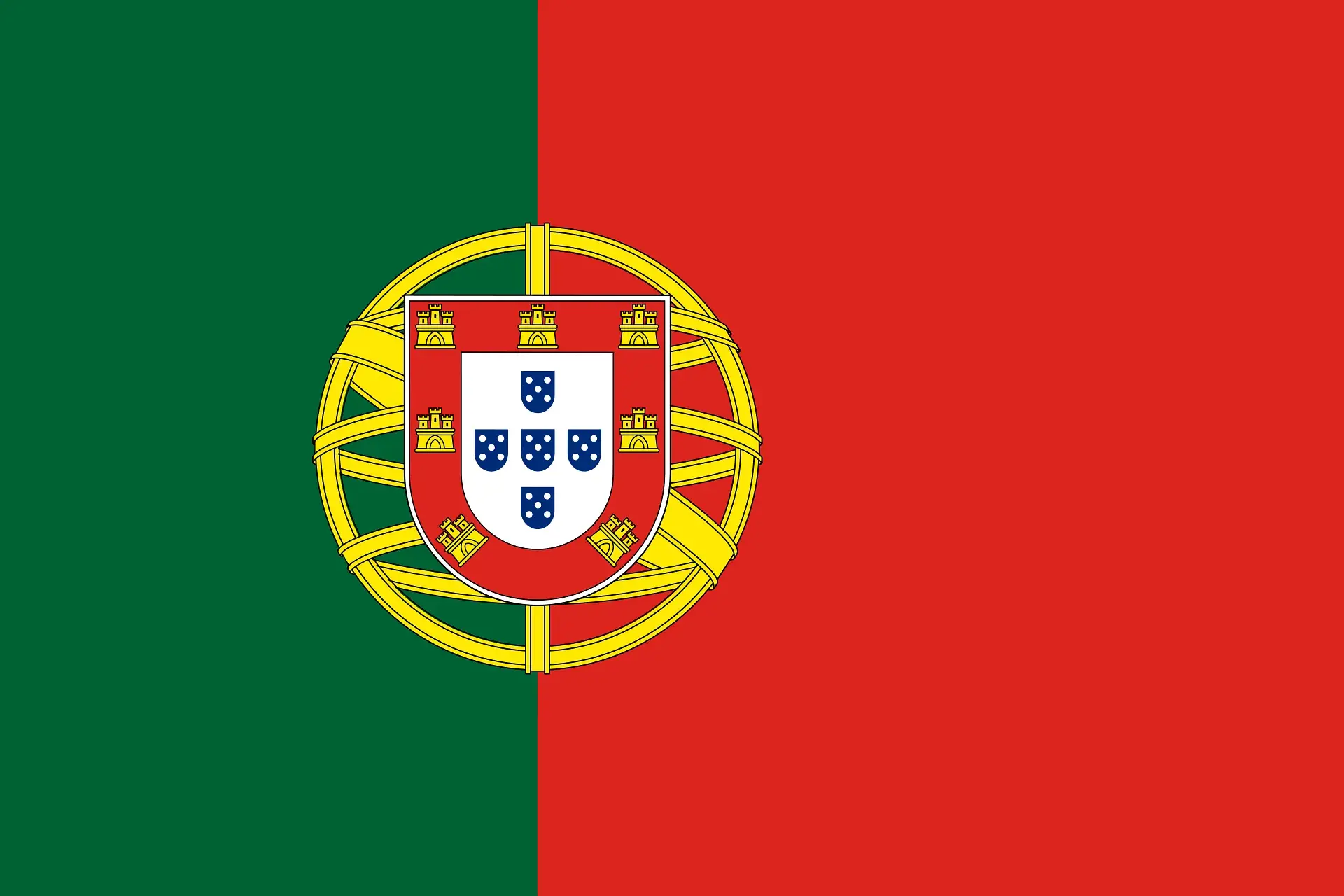
The flag of Portugal is green and red with the Portuguese coat of arms positioned where the two colors meet. It was first presented on December 1, 1910, after the revolution that led to the formation of the First Portuguese Republic, and was officially adopted on June 30, 1911.
In this guide, you’ll learn about the Portuguese flag’s appearance, colors, meaning, symbolism, history, and official adoption, along with interesting facts about Portugal. And if you want to learn even more about Portugal or its flag, ask Quillbot’s AI Chat.
Key takeaways
The flag of Portugal is a rectangular green-and-red bicolor with the Portuguese coat of arms centered where the two colors meet. It has represented Portugal since 1911, following the establishment of the First Portuguese Republic.
Every element of the flag has meaning, from the green and red fields to the coat of arms and armillary sphere, reflecting Portugal’s history, maritime achievements, and national identity.
Discover how the Portuguese flag evolved over more than 800 years, from medieval royal symbols to the modern design adopted after the 1910 revolution.
Explore fascinating facts about Portugal and its flag, including its unique design, global influence, and remarkable historical firsts.
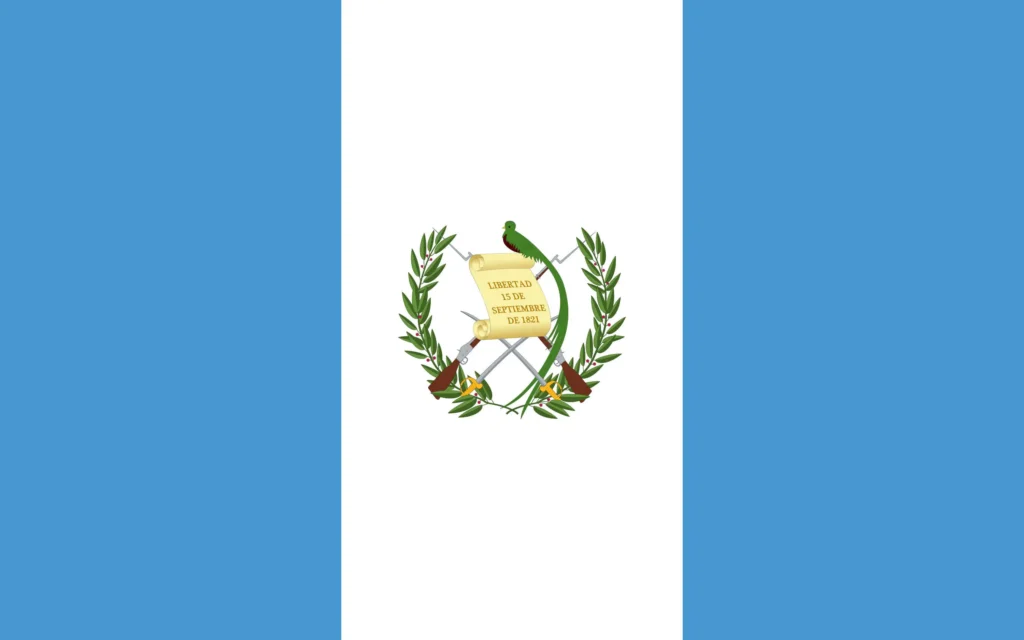
The flag of Guatemala, also known as the Pabellón Nacional (National Pavilion) or Azul y Blanco (Blue and White), features three vertical stripes in two colors: sky blue and white. The two blue stripes appear on either side of a white stripe, which holds the country’s coat of arms at its center.
TipAsk Quillbot’s AI Chat to find out more about the flag of Guatemala.
Key takeaways
Guatemala’s flag (Azul y Blanco) features blue-and-white vertical stripes with the coat of arms at the center.
The flag’s colors symbolize values such as justice, loyalty, purity, and peace.
The coat of arms represents Guatemala’s independence and national identity through symbols like the quetzal and laurel wreath.
Guatemala’s flag shares its blue-and-white design with other Central American countries due to their shared history.
Liberia is a west African nation with a unique history that became independent in 1847. It is known for its lush forests, many rare species, and ethnic and cultural diversity. In this guide, you’ll discover the meaning and symbolism of the flag of Liberia, along with the story behind it. You’ll also find fun facts and details about Liberia.
Try Quillbot’s free Image Generator to create fun graphics of your favorite country flags.
Key takeaways
Learn the meaning, symbolism, and history behind Liberia’s “Lone Star” national flag and the story of how the country was formed.
Discover what each color and symbol in the flag of Liberia represents and why it bears resemblance to the United States flag.
Find fun facts about Liberia and free tools for making personalized graphics of your favorite country flags.
The flag of Costa Rica features five horizontal stripes in blue, white, and red. From top to bottom, the stripes are arranged blue, white, red, white, and blue. The central red stripe is twice as wide as each of the other four stripes.
TipAsk Quillbot’s AI Chat to find out more about the flag of Costa Rica.
Key takeaways
Costa Rica’s flag has five horizontal stripes in blue, white, red, white, and blue, with the central red stripe twice as wide as the others; the state version of the flag also includes the national coat of arms.
Adopted in 1848, the design was proposed by Pacífica Fernández Oreamuno and drew inspiration from the French tricolor.
Blue represents the sky, white symbolizes peace, and red honors those who died for freedom.
The flag of Nicaragua consists of two blue stripes, one white stripe, and a national coat of arms with text that says “Republica de Nicaragua, America Central.” It was first adopted in 1908 but wasn’t made official until 1971. It’s similar to the flags of several other Central American countries, particularly El Salvador.
To learn more about Nicaragua’s flag or another world flag, ask Quillbot’s AI Chat. You can also ask AI Chat for lists or types of flags, such as “flags of the world that include a coat of arms.”
Key takeaways
The flag of Nicaragua features two blue stripes, a white stripe, and a detailed coat of arms that symbolizes the country’s geography, history, and values, including peace, liberty, and justice.
Its modern design dates to 1908 and was officially standardized in 1971, but its roots trace back to the blue-white-blue flag of the former Federal Republic of Central America.
Nicaragua’s flag closely resembles those of other Central American countries, especially El Salvador, because they share a common historical origin, though each has distinct symbols and proportions.
The flag also stands out for its unique features, including the only sovereign-state flag with a literal rainbow and one of the few national flags to include the color purple.
Bolivia is a small but mighty nation located in South America, with a proud, independent spirit and plurinational character. It is known for its sizable indigenous population and striking landscapes, which include the Amazon Rainforest, Andes Mountains, Atacama Desert, and Lake Titicaca.
In this guide, you’ll learn about the flag of Bolivia and the symbolism behind it. If you’re planning a trip to Bolivia, Quillbot’s Travel Itinerary Generator can help.
Key takeaways
Learn the meaning, symbolism, and history behind Bolivia’s two official national flags: the red, yellow, and green tricolor and the Wiphala, which represents the country’s indigenous peoples and plurinational identity.
Discover what each color and symbol represents, the history, and how the flags are used today.
Explore downloadable, customizable Bolivia-themed graphics and phone backgrounds.
Download our FREE All-in-One Content Workflow Guide to learn how to create, refine, and repurpose content more efficiently with Quillbot. Packed with actionable tips and real-world workflows.